
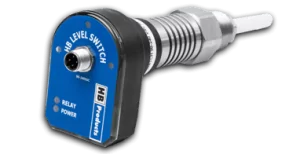
Technical data: HBSR-HFC-SSR-2
The HBSR-HFC-SSR-2 is a Level Switch designed for detecting HFC, HFO, and CFC refrigerants, suitable for a variety of industrial refrigeration applications. It is typically installed in refrigerant vessels, pump separators, or heat exchangers.
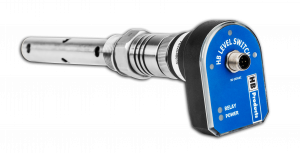
Technical data: HBSC2-SSR-2
The HBSC2-SSR-2 is a level switch designed to detect CO2, Butane, Isobutane, and Propane refrigerants. It is commonly installed in or on refrigerant vessels, pump separators, or heat exchangers. This sensor is engineered to withstand high pressure and low temperatures, making it suitable for a range of industrial refrigeration applications.
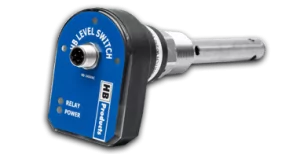
Technical data: HBSO-SSR-2
The HBSO1 (for PAO & mineral oil) and HBSO2 (for POE & PAG oil) are Level Switches designed to detect lubricating oils in refrigeration systems. Commonly installed on compressors and oil separators, they can also be used in other locations within the oil system. The unique measurement principle allows these sensors to detect oil without detecting refrigerant, providing high accuracy even in challenging conditions with oil spray and foam.
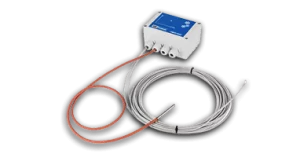
Technical data: HBDF
The HBDF is a sensor designed for evaporators with at least 5 mm fin spacing, operating in cold rooms with temperatures ranging from -30°C to 10°C (-22°F to 50°F). It is intended for indoor use and is not suitable for wet or outdoor environments. The sensor integrates a temperature sensor for compensation within the range of 0°C to 10°C (32°F to 50°F).
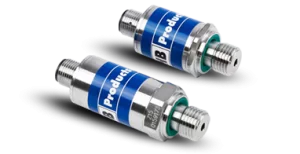
Technical data: HBPS
HBPS is a pressure sensor that is specially developed for the refrigeration industry. The sensor has a stainless membrane, and the housing is also made of stainless steel. It has a quick reaction time of < 2 ms, and it is accessible in 3 pressure ranges of 0...6 bar, -1...25 bar and -1...200 bar.
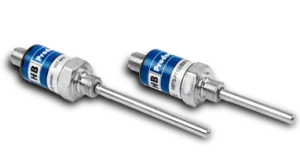
Technical data: HBTS
HBTS is a temperature sensor in accordance with DIN 60751, and it is available in two variants, PT100 and PT1000 – DIN B – class 3. The sensor is designed for industrial applications where servicing of the electronics can be carried out without emptying the system of refrigerant. The sensor is delivered with a 60 & 90 mm sensor element length and a 6 mm sensor diameter. Sensor well is included with the sensor.
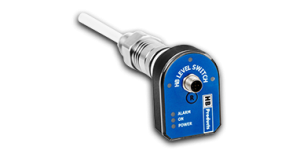
Technical data: HBAC-U
This sensor is versatile and can be used exclusively for leakage detection or for both oil return and leakage detection of CO2 into ammonia. It must be installed in the liquid ammonia circuit. When positioned in a low location where oil collects, it can manage oil levels and detect CO2 leaks into the ammonia circuit, functioning similarly to the HBSR but based on the mA signal.
If CO2 leaks into the ammonia part, it forms ammonium carbamate, a highly corrosive salt that clogs the system and can take weeks to remove. Failure to address this in time can cause significant downtime and damage to the entire ammonia system.
The sensor provides a digital alarm output and an increased mA output when ammonium carbamate is detected in the ammonia. For optimal detection, the sensor should be installed in the liquid ammonia at the bottom of the vessel, as ammonium carbamate is heavier than ammonia. However, it can be installed in any position as long as it is covered by liquid ammonia.
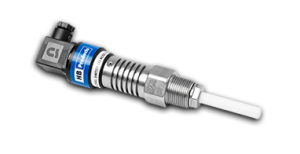
Technical data: HBSR-HFC
The HBSR-HFC is a Level Switch designed for detecting common HFC, HFO, and CFC refrigerants in refrigeration systems. It is typically installed in refrigerant vessels, pump separators, economizers, or heat exchangers.
The Level Switch can detect all common refrigerants in gas. It is also possible to detect some refrigerants in oil if these two liquids don’t mix. This will not work for R1234ze, R1233zd, R125 and mixtures containing large amounts of these refrigerants.
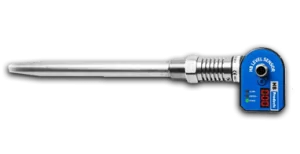
Technical data: HBLC-OIL
The HBLC-OIL sensor is designed to measure oil levels and transmits this information via a 4-20 mA analog signal, making it a reliable tool for various industrial applications.
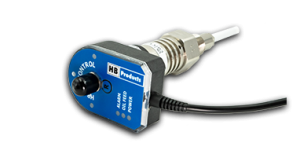
Technical data: HBOR/C
The HBOR/C is a sensor designed to detect oil in liquid ammonia, similar to the HBSR switch, but with enhanced capabilities. It can directly control a valve to fill or empty a container, helping maintain the correct oil level in ammonia refrigeration systems.